

United States (EN)
Select your region or country.
Inside Sørlandet Hospital’s transition to fully digital pathology
Fully digital pathology at Sørlandet Hospital, Kristiansand
The Pathology Department at Sørlandet Hospital, Kristiansand in Norway is a true example of how digital transformation can make workflows faster and more efficient.
It is part of Helse Sør-Øst RHF (South-Eastern Norway Regional Health Authority), the largest of Norway’s four health regions. Kristiansand plays a leading role in the region’s digital pathology rollout. The goal is to let pathologists across eight hospitals share expertise, balance workloads, and deliver faster, high-quality diagnostics for patients.
From three scanners to a fully digital workflow
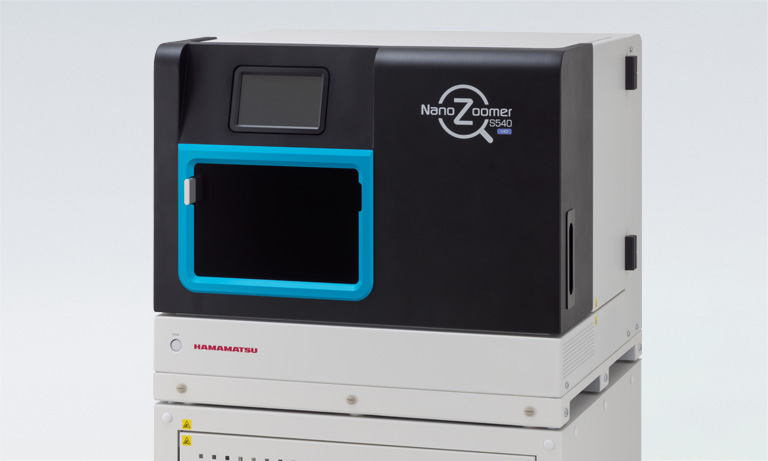
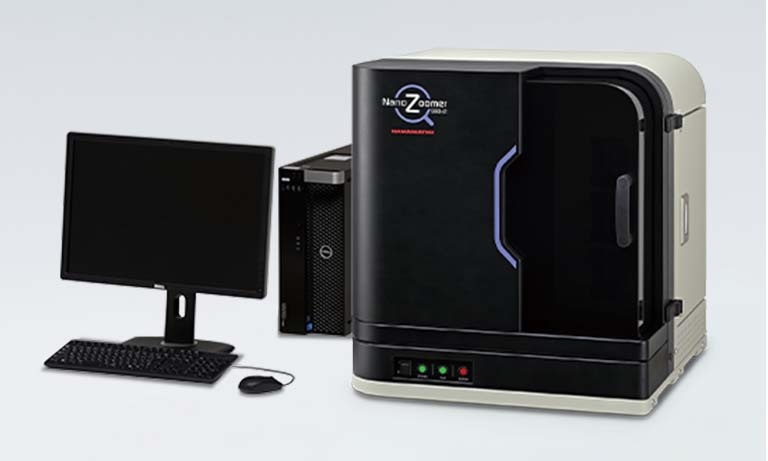
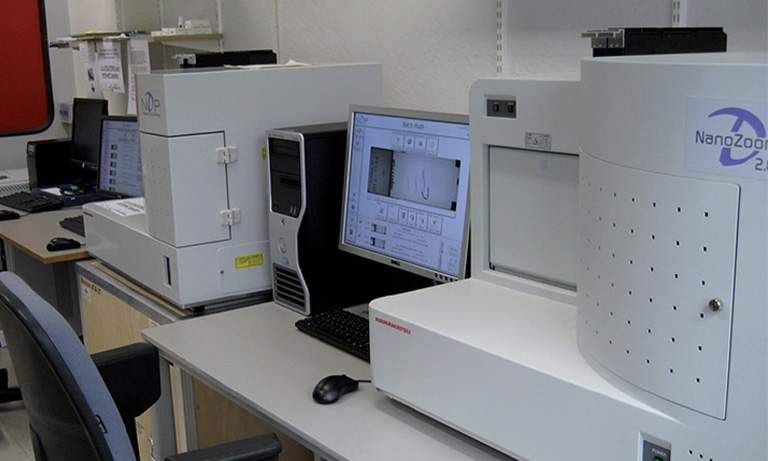
The department’s digital journey began in September 2023 with the installation of two Hamamatsu Photonics’ NanoZoomer®S20MD scanners and one NanoZoomer S60v2MD. The compact S20MD units are ultra-fast and can run in parallel, making them ideal for scaling up throughput as slide volumes increase. The S60v2MD adds flexibility with the ability to scan both standard and double-sized glass slides used for larger tissue samples.
The mix of S20MD and S60v2MD models works seamlessly together, producing consistent image quality and color tones. This uniformity is achieved through the shared high-quality optical elements and color-correction method used across Hamamatsu’s IVDR-compliant portfolio. In daily use, the scanners function as one connected system, giving the team flexibility in workload distribution and confidence through system redundancy.
After validating and optimizing the first installations, the team scaled up their digital setup. The initial units helped fine-tune the workflow, and once the configuration proved stable, the hospital expanded. In February 2025, the department added two more S20MD scanners and another S60v2MD, completing the full digital configuration that is in use today. The new setup went fully live in March 2025, marking the hospital’s official transition to 100 % digital histology diagnostics. Cytology followed with a full digital transition in August 2025.
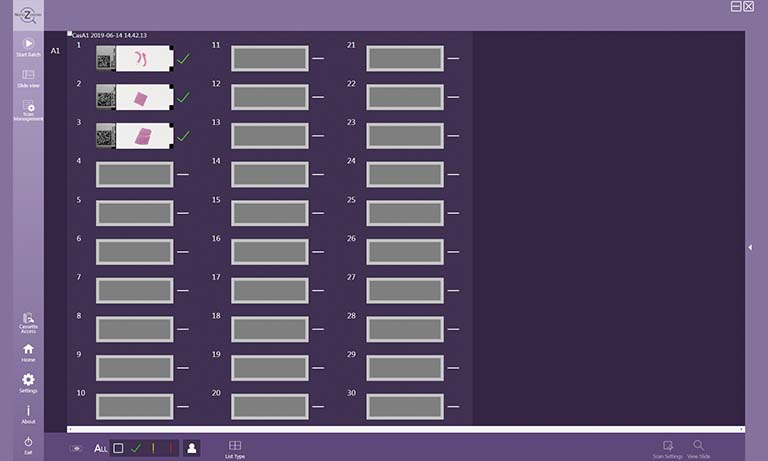
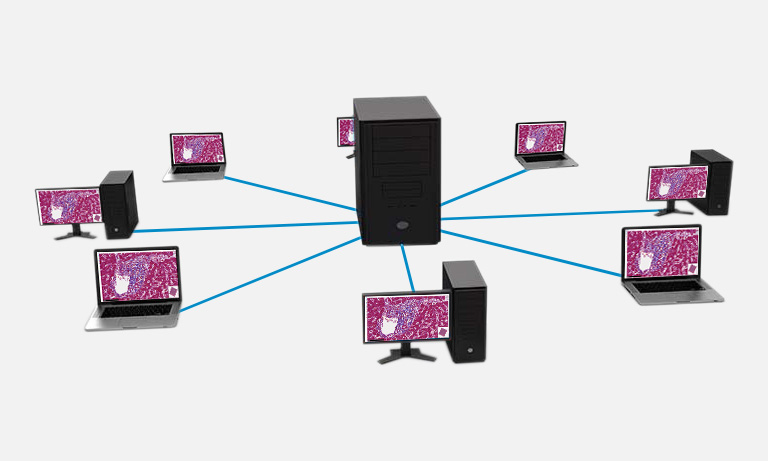
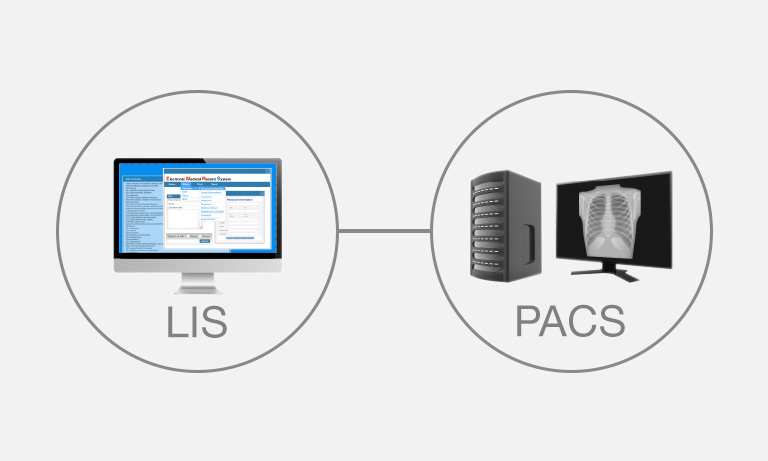
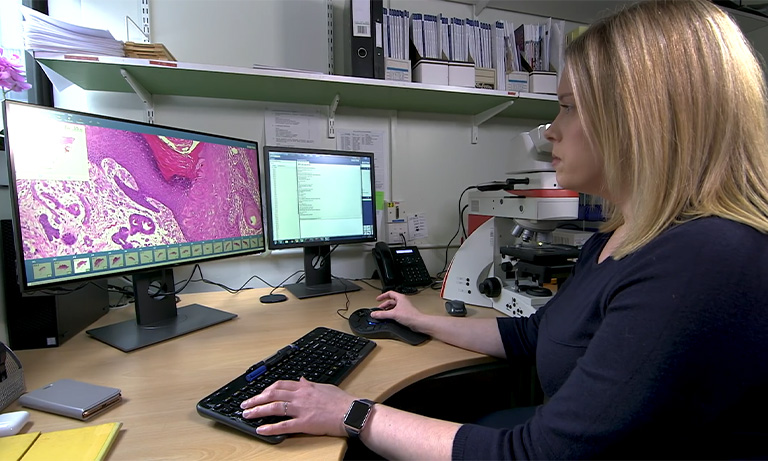
DICOM images are sent directly from the scanners to the hospital’s PACS, which is integrated with the hospital LIMS. This means each case can be accessed together with its corresponding images. In the scanner room, a dedicated workstation allows laboratory staff to perform quality control immediately after scanning, while pathologists review and diagnose cases from their own PACS workstations. This ensures a seamless flow from slide preparation to final reporting.
Compact, smart, and efficient
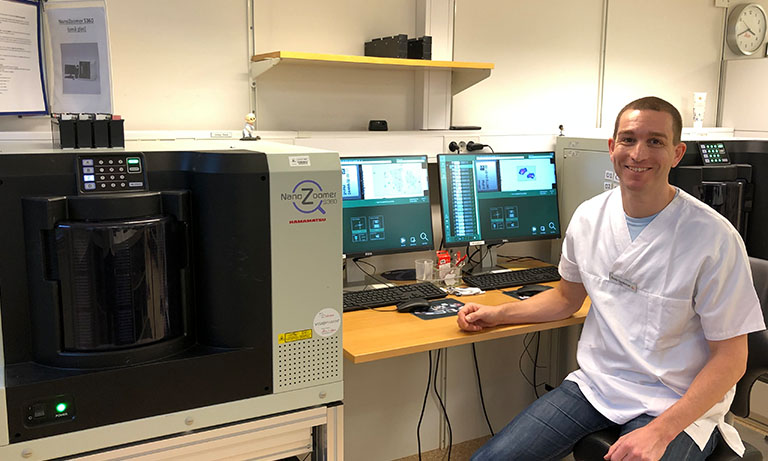
The digital scanning room in Kristiansand is small but very well organized.
Two pairs of NanoZoomer S20MD scanners are neatly stacked to save space, and two S60v2MD scanners stand beside them.
Nine wall-mounted monitors show the status of all scanners and workstations, giving the team a clear overview of the entire workflow.
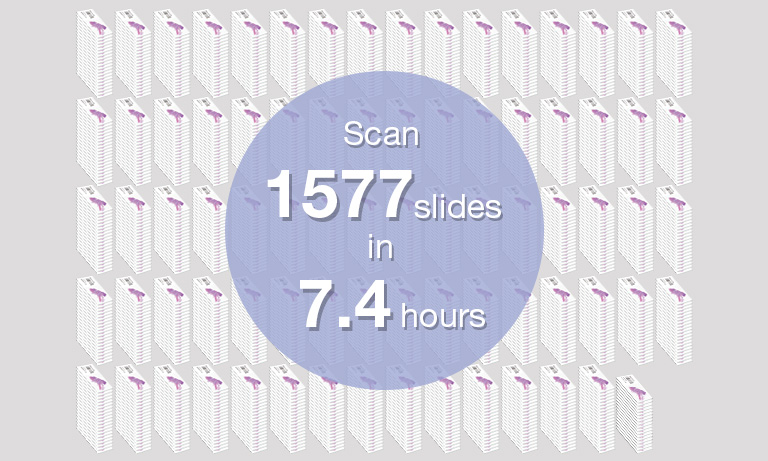
In this compact space, efficiency is key. During a throughput test with the four S20MD scanners, slides were continuously loaded throughout the day. In just 7.4 hours, the team scanned 1,577 slides averaging about 210 slides per hour in total, or around 53 slides per scanner. These were full-size diagnostic samples, not the small 15 mm × 15mm test slides often used in technical brochures. This makes the result a true reflection of the department’s daily efficiency.
Thanks to the well-coordinated setup, scanning runs continuously and reliably, with no bottlenecks and plenty of room to expand in the future.

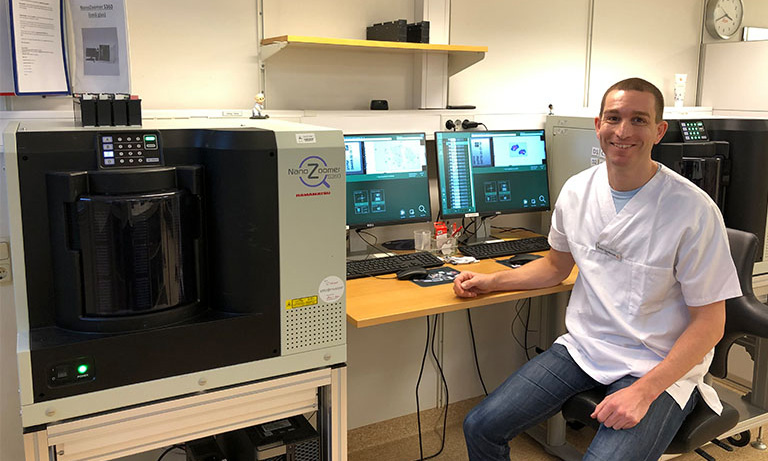
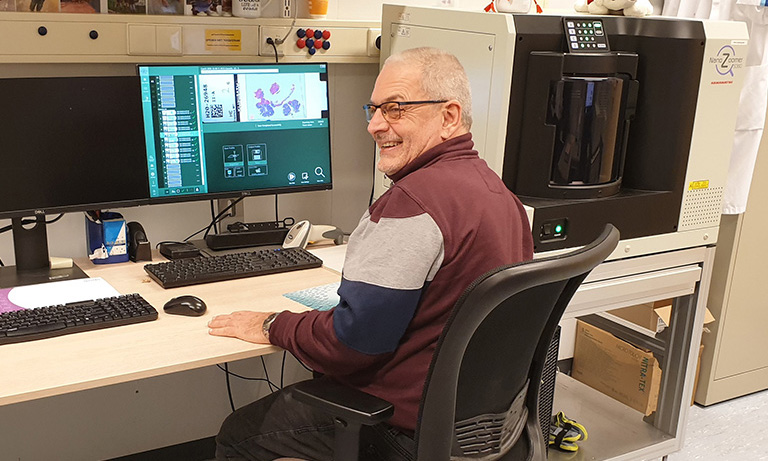
A technical assistant working in scanner room
“We’re 100 % digital now, but we’re not done yet.
The next step is to make the workflow more practical and logical — everything should be arranged so we don’t waste time walking back and forth between steps.”
“The exciting part is what comes next: automation that takes care of the repetitive jobs and gives people better, more ergonomic tasks.”
Kim-Andreas Ulstad, Histology Department Manager at Sørlandet Hospital
Looking ahead
The digital transformation in Kristiansand is still evolving. With the fully digital workflow now established, the team is beginning to explore what the next steps could look like. Automation and artificial intelligence are both areas they would like to move towards in the future, especially to reduce repetitive tasks and support pathologists with growing case volumes.
These ideas are still in the early planning stage, but the team is enthusiastic about the possibilities and is looking forward to what the next years may bring. As one of the pathologists explained: “AI will help us work faster and smarter, but the final decision will always remain ours.” Dr. Annie Hsu
The team views digital pathology not as a finished project but as a continuous journey toward better collaboration, smarter workflows, and ultimately, improved patient care.
A strong foundation for the future
The Pathology Department at Sørlandet Hospital in Kristiansand shows how thoughtful planning, teamwork, and the right technology can transform a lab. Their combination of Hamamatsu NanoZoomer scanners and a fully integrated PACS platform has created a reliable, high-throughput digital workflow that supports faster, high-quality diagnostics. With a strong digital foundation in place, the department is well positioned to build on this success whether through automation, AI, or further regional collaboration. Sørlandet Hospital is setting a benchmark for the entire Helse Sør-Øst region and beyond.
Technology partners
This digital transformation was supported by close collaboration with experienced technology partners. Inter Instrument and Visiopharm have collaborated for over 15 years, building a strong foundation for advancing digital pathology in Norway. This enduring partnership combines Inter Instrument’s local market expertise with Visiopharm’s world-leading image analysis and AI solutions. Together, they aim to drive scanner sales while shaping the future of pathology through innovative AI-powered applications, enabling laboratories and hospitals to achieve greater diagnostic accuracy, efficiency, and scalability.


Profile
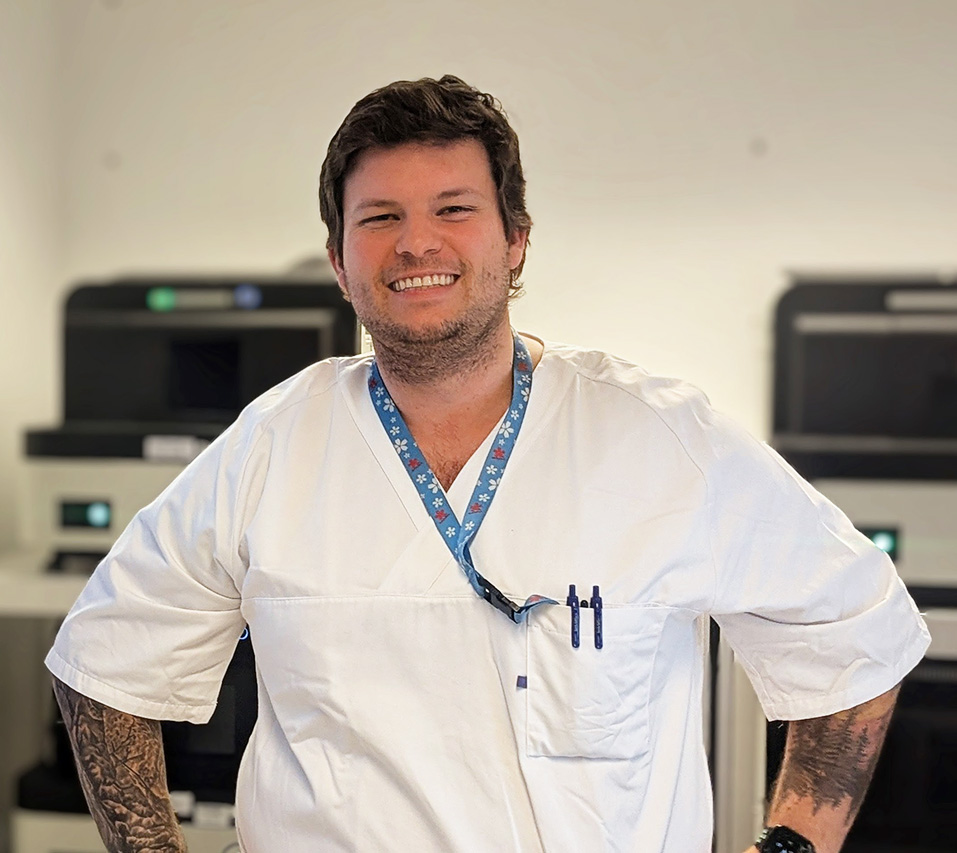
Kim-Andreas Ulstad is Histology Department Manager at Sørlandet Hospital. He has been with the department since 2018 and has worked in pathology since 2011. He served as Implementation Manager for digital pathology in the department and as Regional Laboratory Coordinator for all eight pathology departments during the regional digital pathology project.
About the author

Marta Böhle, PhD, is an Application Engineer at Hamamatsu, specializing in both research and clinical whole slide imaging using NanoZoomer scanners. With a PhD in Neuroscience and extensive experience in diverse imaging techniques, Marta is passionate about imaging and dedicated to supporting customers in their projects.
The NanoZoomer line-up and medical device regulatory status varies across countries. For more information, please contact your local Hamamatsu sales representative.
As of March 2026, cytology is not within the intended use of NanoZoomer products.
Other clinical case study

- Confirmation
-
It looks like you're in the . If this is not your location, please select the correct region or country below.
You're headed to Hamamatsu Photonics website for US (English). If you want to view an other country's site, the optimized information will be provided by selecting options below.
In order to use this website comfortably, we use cookies. For cookie details please see our cookie policy.
- Cookie Policy
-
This website or its third-party tools use cookies, which are necessary to its functioning and required to achieve the purposes illustrated in this cookie policy. By closing the cookie warning banner, scrolling the page, clicking a link or continuing to browse otherwise, you agree to the use of cookies.
Hamamatsu uses cookies in order to enhance your experience on our website and ensure that our website functions.
You can visit this page at any time to learn more about cookies, get the most up to date information on how we use cookies and manage your cookie settings. We will not use cookies for any purpose other than the ones stated, but please note that we reserve the right to update our cookies.
1. What are cookies?
For modern websites to work according to visitor’s expectations, they need to collect certain basic information about visitors. To do this, a site will create small text files which are placed on visitor’s devices (computer or mobile) - these files are known as cookies when you access a website. Cookies are used in order to make websites function and work efficiently. Cookies are uniquely assigned to each visitor and can only be read by a web server in the domain that issued the cookie to the visitor. Cookies cannot be used to run programs or deliver viruses to a visitor’s device.
Cookies do various jobs which make the visitor’s experience of the internet much smoother and more interactive. For instance, cookies are used to remember the visitor’s preferences on sites they visit often, to remember language preference and to help navigate between pages more efficiently. Much, though not all, of the data collected is anonymous, though some of it is designed to detect browsing patterns and approximate geographical location to improve the visitor experience.
Certain type of cookies may require the data subject’s consent before storing them on the computer.
2. What are the different types of cookies?
This website uses two types of cookies:
- First party cookies. For our website, the first party cookies are controlled and maintained by Hamamatsu. No other parties have access to these cookies.
- Third party cookies. These cookies are implemented by organizations outside Hamamatsu. We do not have access to the data in these cookies, but we use these cookies to improve the overall website experience.
3. How do we use cookies?
This website uses cookies for following purposes:
- Certain cookies are necessary for our website to function. These are strictly necessary cookies and are required to enable website access, support navigation or provide relevant content. These cookies direct you to the correct region or country, and support security and ecommerce. Strictly necessary cookies also enforce your privacy preferences. Without these strictly necessary cookies, much of our website will not function.
- Analytics cookies are used to track website usage. This data enables us to improve our website usability, performance and website administration. In our analytics cookies, we do not store any personal identifying information.
- Functionality cookies. These are used to recognize you when you return to our website. This enables us to personalize our content for you, greet you by name and remember your preferences (for example, your choice of language or region).
- These cookies record your visit to our website, the pages you have visited and the links you have followed. We will use this information to make our website and the advertising displayed on it more relevant to your interests. We may also share this information with third parties for this purpose.
Cookies help us help you. Through the use of cookies, we learn what is important to our visitors and we develop and enhance website content and functionality to support your experience. Much of our website can be accessed if cookies are disabled, however certain website functions may not work. And, we believe your current and future visits will be enhanced if cookies are enabled.
4. Which cookies do we use?
There are two ways to manage cookie preferences.
- You can set your cookie preferences on your device or in your browser.
- You can set your cookie preferences at the website level.
If you don’t want to receive cookies, you can modify your browser so that it notifies you when cookies are sent to it or you can refuse cookies altogether. You can also delete cookies that have already been set.
If you wish to restrict or block web browser cookies which are set on your device then you can do this through your browser settings; the Help function within your browser should tell you how. Alternatively, you may wish to visit www.aboutcookies.org, which contains comprehensive information on how to do this on a wide variety of desktop browsers.
5. What are Internet tags and how do we use them with cookies?
Occasionally, we may use internet tags (also known as action tags, single-pixel GIFs, clear GIFs, invisible GIFs and 1-by-1 GIFs) at this site and may deploy these tags/cookies through a third-party advertising partner or a web analytical service partner which may be located and store the respective information (including your IP-address) in a foreign country. These tags/cookies are placed on both online advertisements that bring users to this site and on different pages of this site. We use this technology to measure the visitors' responses to our sites and the effectiveness of our advertising campaigns (including how many times a page is opened and which information is consulted) as well as to evaluate your use of this website. The third-party partner or the web analytical service partner may be able to collect data about visitors to our and other sites because of these internet tags/cookies, may compose reports regarding the website’s activity for us and may provide further services which are related to the use of the website and the internet. They may provide such information to other parties if there is a legal requirement that they do so, or if they hire the other parties to process information on their behalf.
If you would like more information about web tags and cookies associated with on-line advertising or to opt-out of third-party collection of this information, please visit the Network Advertising Initiative website http://www.networkadvertising.org.
6. Analytics and Advertisement Cookies
We use third-party cookies (such as Google Analytics) to track visitors on our website, to get reports about how visitors use the website and to inform, optimize and serve ads based on someone's past visits to our website.
You may opt-out of Google Analytics cookies by the websites provided by Google:
https://tools.google.com/dlpage/gaoptout?hl=en
As provided in this Privacy Policy (Article 5), you can learn more about opt-out cookies by the website provided by Network Advertising Initiative:
http://www.networkadvertising.org
We inform you that in such case you will not be able to wholly use all functions of our website.
Close